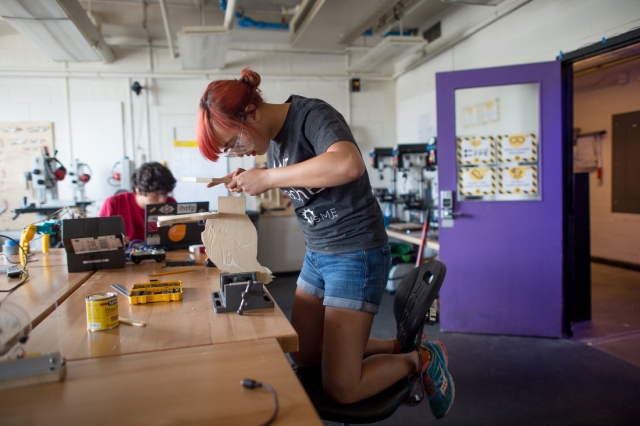
Making is central to MIT’s identity. It is the embodiment of MIT’s motto, "mens et manus" — "mind and hand." For many students, making is more than designing, engineering, arts, and crafts; it is an act of community.

News

“It wasn’t clear yet what was coming, but it was clear we had to pay attention,” MIT's Rajagopal says. “And it got more clear by the day.”
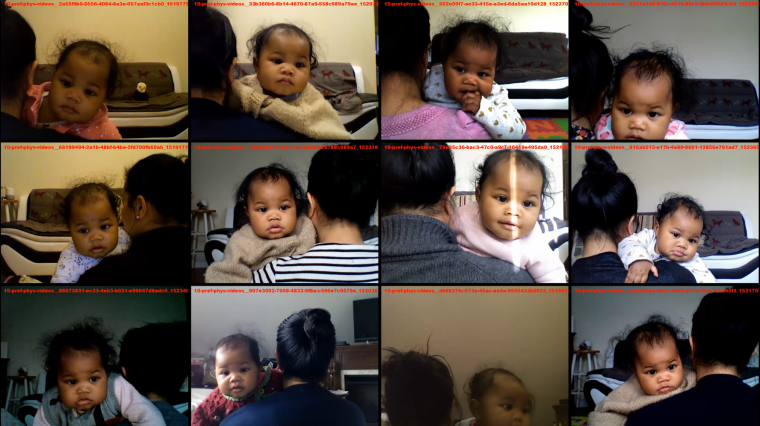
A set of images documents one participant through multiple interactions with MIT's "Your Baby the Physicist" study. The study is one of many now made more easily accessible to participants through the new Children Helping Science collaborative.
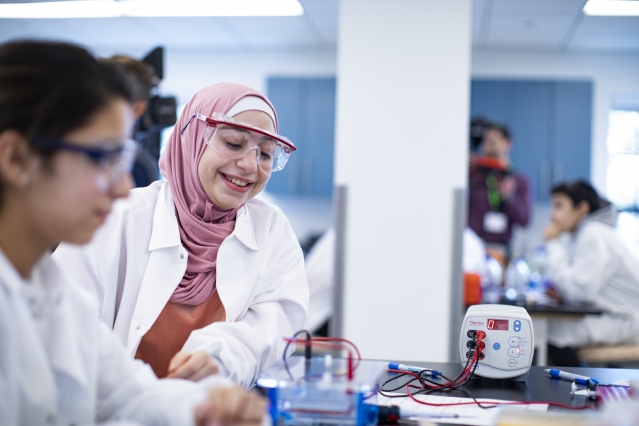
The online summer program will teach students about biotechnology and the unique ways neuroscientists and inventors use STEM knowledge to solve problems.
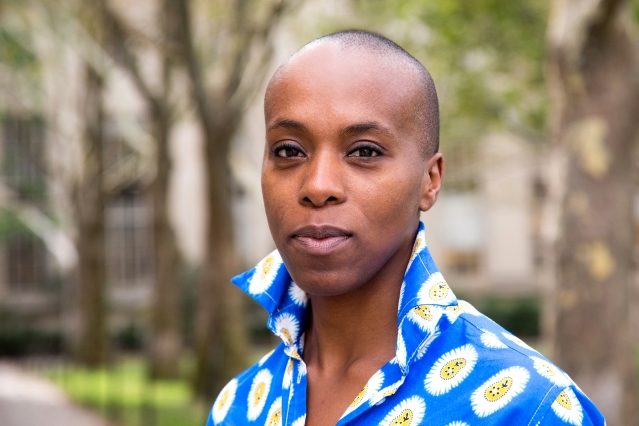
“Learning is not just about having a professor transfer knowledge but also about the life-long lessons that you pick up from teachers in the process," one nominator wrote in support of Amah Edoh's receipt of the Everett Moore Baker Award.
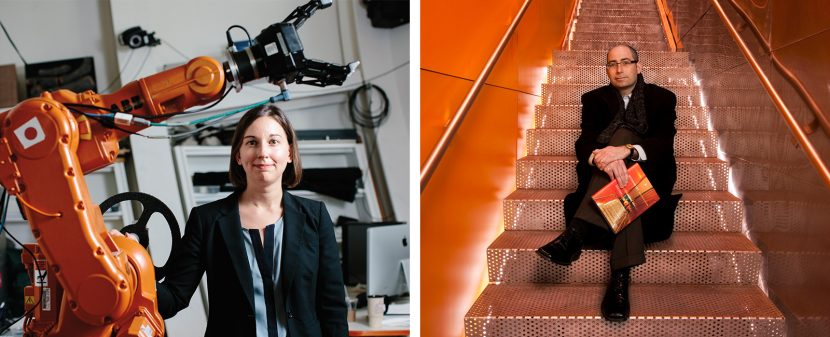
“At the top of our list of learning objectives is the idea that technology alone can’t solve many problems, and that our tools come with values incorporated in them,” - MIT's Julie Shah.
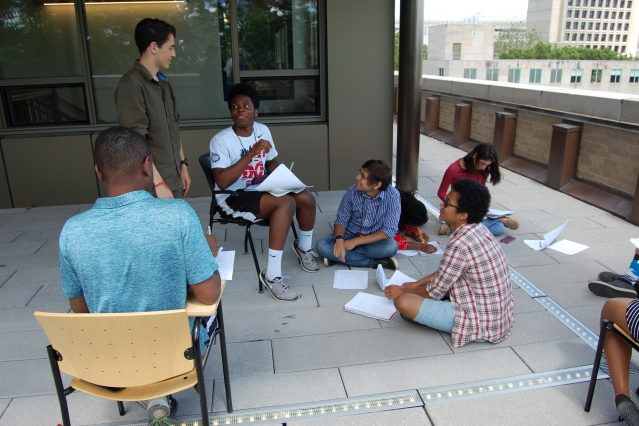
The Program for Research in Mathematics, Engineering and Science (PRIMES) pairs high school students with MIT graduate students and postdocs to investigate unsolved problems in mathematics, computer science, and computational biology.

"My conviction is that it is possible to make significant progress by focusing on small manageable issues, and addressing each of these issues as rigorously as possible." - MITili Affiliated Faculty, Esther Duflo to the class of 2020.

“We’ve spent the last two decades opening up MIT to the world virtually through online teaching and learning,” says Professor Sanjay Sarma, vice president for open learning.

“There will be significant opportunities to shape technological trajectories in a number of fields. For example, we imagine we’re going to see changes around online education, with opportunities there for innovation and expanding access.” – MIT’s Elisabeth B. Reynolds